
How Babysitting is Filling Childcare Gaps in Australia
Find a babysitter or babysitting job, or stay up to date with the latest childcare tips!
Get started today for free.
Get startedMore than one in three Australian families need a babysitter at least once per week, with a large share of childcare requests taking place during work hours. This shows that many parents rely on babysitting not just for the occasional night out, but as part of how they manage their childcare needs. While Australia has a well-developed childcare system, high costs, limited availability, and fixed schedules do not always align with the realities of modern family life. This article explores how working patterns, childcare gaps, and evolving family needs are shaping the role of babysitting in Australia today.
Childcare Challenges in Australia
High childcare costs putting pressure on families
Childcare in Australia is among the most expensive in the world, and costs continue to rise despite government subsidies. Fees have increased faster than inflation and wage growth, leaving many families with significant out-of-pocket expenses. For some parents, childcare costs can make returning to work financially challenging, influencing decisions around working hours or employment altogether.
Limited availability and “childcare deserts”
Access to childcare is not consistent across Australia. Many families live in so-called “childcare deserts,” where there are significantly more children than available places. This is particularly common in regional and rural areas, but also affects some urban communities. As a result, parents may face long waiting lists or struggle to secure a place at all.
Staff shortages limiting capacity
Workforce shortages are a major challenge across the childcare sector. A lack of qualified educators means some centres cannot operate at full capacity or expand to meet demand. This contributes to waiting lists and limits the availability of childcare places, even where facilities exist.
Childcare impacting work and family decisions
Childcare access and affordability are closely linked to parents’ ability to participate in the workforce. Many families report adjusting their working hours, delaying a return to work, or reconsidering employment altogether due to childcare challenges. This highlights how gaps in the childcare system can directly affect both family life and economic participation.
Childcare statistics: How babysitting has become part of working family life
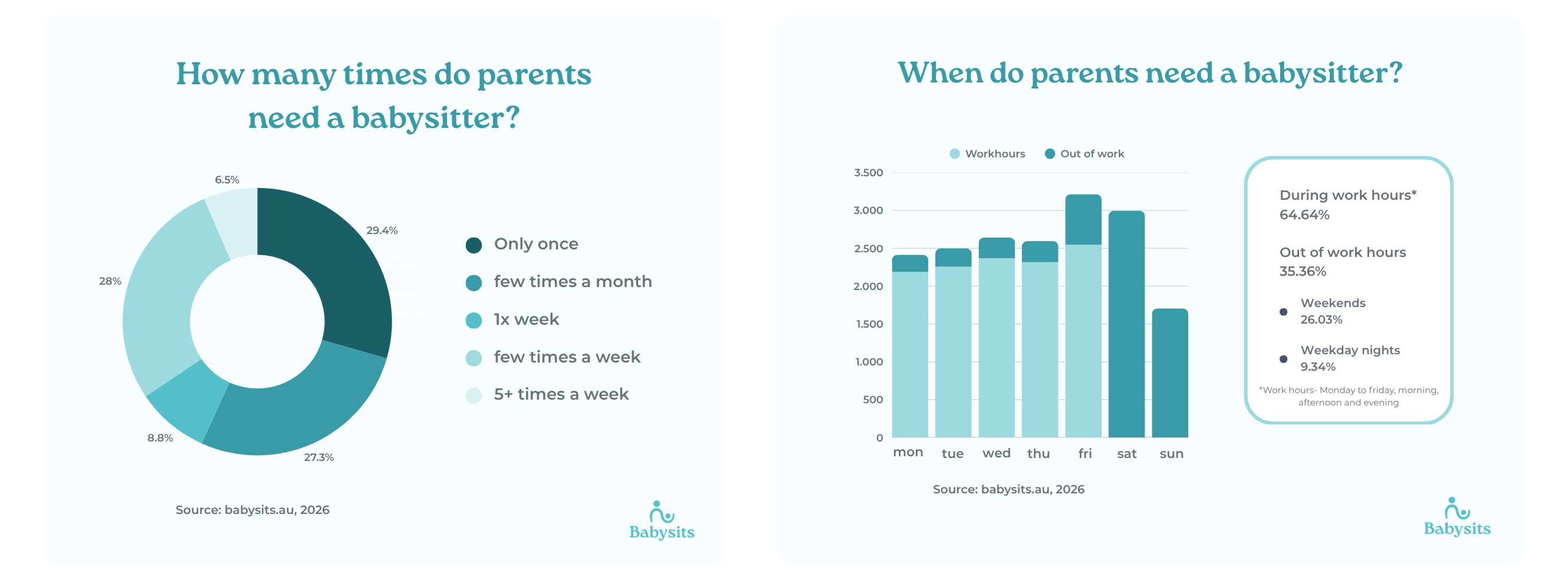
Based on Babysits data for the UK:
- 35.8% of families in Australia need a babysitter at least once per week
- 27% need a babysitter more than once per week
- 64.64% of childcare requests take place during regular working hours
These patterns show that babysitting in Australia is often part of a regular routine, while also being used flexibly throughout the month. With more than 1 in 3 Australian families relying on babysitters at least weekly, childcare needs are clearly recurring, with a large share of this demand taking place during regular working hours.
In Australia, where childcare costs are high and access can vary depending on location, these gaps can directly affect parents’ ability to work. Many families adjust their working hours or make financial sacrifices due to childcare challenges, highlighting the growing need for flexible solutions. In this context, babysitting can offer a more accessible and often more affordable alternative.
Rather than requiring full-time, fixed childcare, many families need support only during specific working hours across the week. This makes flexible options like babysitting a practical way to manage childcare alongside work. This raises a broader question: is this unique to Australia, or part of a wider trend?
A Worldwide Perspective on Childcare During Work Hours
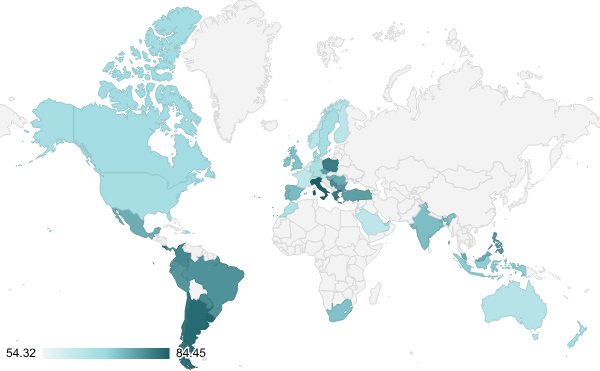
With 64.64% of childcare requests taking place during work hours, Australia is broadly in line with the average across countries where Babysits is active. It sits between countries such as the Netherlands and Belgium (around 55%) and higher-demand countries like Italy, Chile, and Greece, where this share can exceed 80%. This shows that while Australia is not at the highest end, childcare needs are still closely linked to parents’ working schedules, reflecting a broader global pattern.
How families and employers are adapting to childcare gaps
“Babysitting is no longer an occasional solution for families. Parents are using babysitters and nannies to manage work schedules and fill gaps where traditional childcare falls short” – Peter, CEO of Babysits and parent of three.
Companies are also beginning to recognise this shift. Some employers are introducing broader or more flexible employee childcare benefits to help employees access extended childcare, including babysitting, when they need it.
“We’re seeing more and more companies show interest in our childcare employee benefits program, Babysits for Work” – Peter, CEO of Babysits
As work continues to evolve, flexible childcare options such as babysitting are likely to become an essential part of how families manage their childcare needs in the years ahead.